Everything Is Green.So Why Does Something Feel Wrong?
Your numbers may be on target while the work underneath them is quietly getting harder.
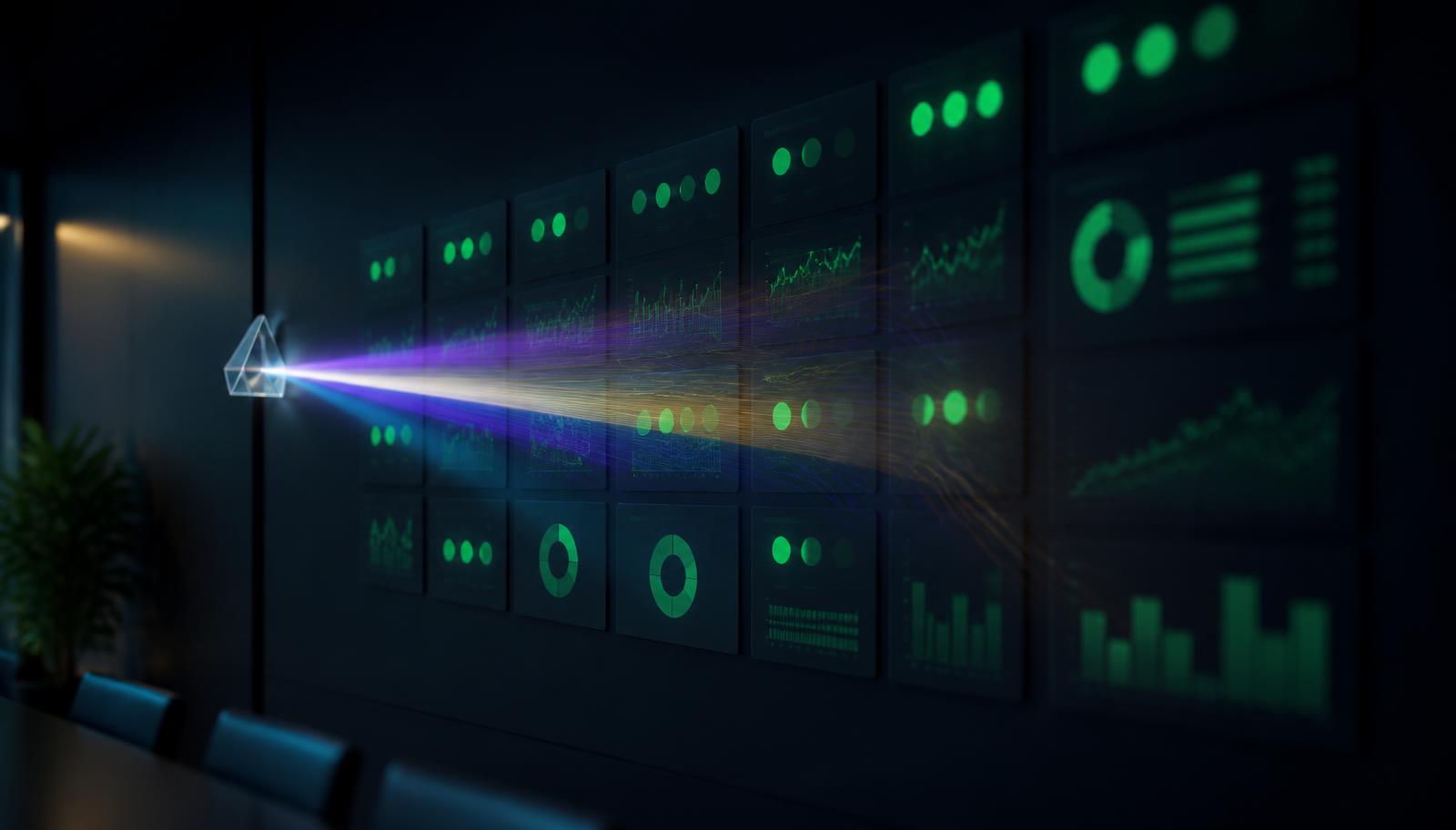
The dashboard tells you the result.
PRISM helps you see what it took to produce it.
Here's a number I wish more operations leaders tracked: how much invisible work does it take to keep everything green?
- On time
- On budget
- Customer satisfied
- Target achieved
Meanwhile, your people are:
- Checking the system manually.
- Following up twice.
- Fixing the same issue again.
- Keeping a side spreadsheet.
- Calling someone they know can “get it through.”
- Staying late to make sure nothing drops.
The outcome is still good.
But the effort required to produce it has changed.
The dashboard says green.The work underneath it is telling a different story.
Green doesn't always mean healthy
Delivery stays on target because planners manually expedite orders.
Renewals remain strong while customers require more reassurance and follow-up.
Service levels hold while employees compensate for broken handoffs.
Shipments arrive on time because someone tracks exceptions outside the system.
Growth continues while every important decision still comes back to the founder.
Different industries. Same signal.
The result looks good.
The work underneath it is getting harder.
Your people may be absorbing the problem
- Someone remembers the exception.
- Someone checks the spreadsheet.
- Someone catches the mistake.
- Someone calls the customer.
- Someone knows who to contact when the process doesn't work.
- Someone gets it across the finish line.
Again.
The metric stays green.
Eventually, the extra effort becomes normal.
A workaround used once solves a problem.
A workaround used every day is a signal.
That's organizational intelligence
I don't think organizational intelligence needs to be complicated. It's understanding what your people, work, customers and systems are telling you together — early enough to do something about it.
tells you what you measured.
tell you what it took to get there.
tell you what they're experiencing.
tell you where the process isn't working as designed.
The intelligence is in connecting those signals.
“What are we doing today to keep the numbers green that we weren't doing six months ago?”
- More spreadsheets?
- More follow-ups?
- More manual checks?
- More approvals?
- More customer reassurance?
- More exceptions?
You may be listening to your organization's early warning system.
The signal usually comes before the problem
- Customer escalation.
- Missed deadline.
- Quality issue.
- Forecast miss.
- Failed handoff.
- Project going sideways.
Was there really no warning?
Or were there small things happening that nobody thought were important enough to connect?
The PRISM lenses
- PPatternsWhat keeps happening?
- RRiskWhere is exposure building?
- IInstabilityWhere is work getting harder?
- SSignalsWhat is changing?
- MMovementWhere should you act?
PRISM isn't about finding everything that's wrong.
It's about finding what matters next.
AI raises the stakes.
We're giving AI access to documents, customer information, knowledge bases and workflows. But I think there is a question that needs to come first: does AI know how the work really works?
- Not just the documented process.
- The exceptions.
- The judgment.
- The workaround.
- The customer history that changes the decision.
- The person everyone calls when something doesn't look right.
Before we automate the work, we need to understand the work.
Look below the metric.
Your dashboard isn't wrong.
It's just not the whole story.
- 01What changed?
- 02What keeps happening?
- 03What has become harder?
- 04What are people compensating for?
- 05Where are exceptions becoming normal?
The problem may not have happened yet.
You're seeing the signal.
And that's when you still have choices.
What is your organization trying to tell you?
The free PRISM Signal Scan™ gives you a simple starting point for identifying where hidden friction, instability or operational risk may already be forming.
Five questions. About two minutes. No complicated assessment.
See the signals before they become the problem.